PRJ/
UDT
From data sourced from multiple providers, scattered across dozens of clubs, to an in-house data and reporting platform with automated pipelines. The story of the web platform’s development, featuring API integrations, automated data flows, dashboards, and reporting.
The Challenge
When you manage a few fitness centers, a well-organized Excel spreadsheet might be enough. When you manage dozens of clubs across multiple states and open new locations every year, everything changes—and Excel might end up getting in your way more than it helps.
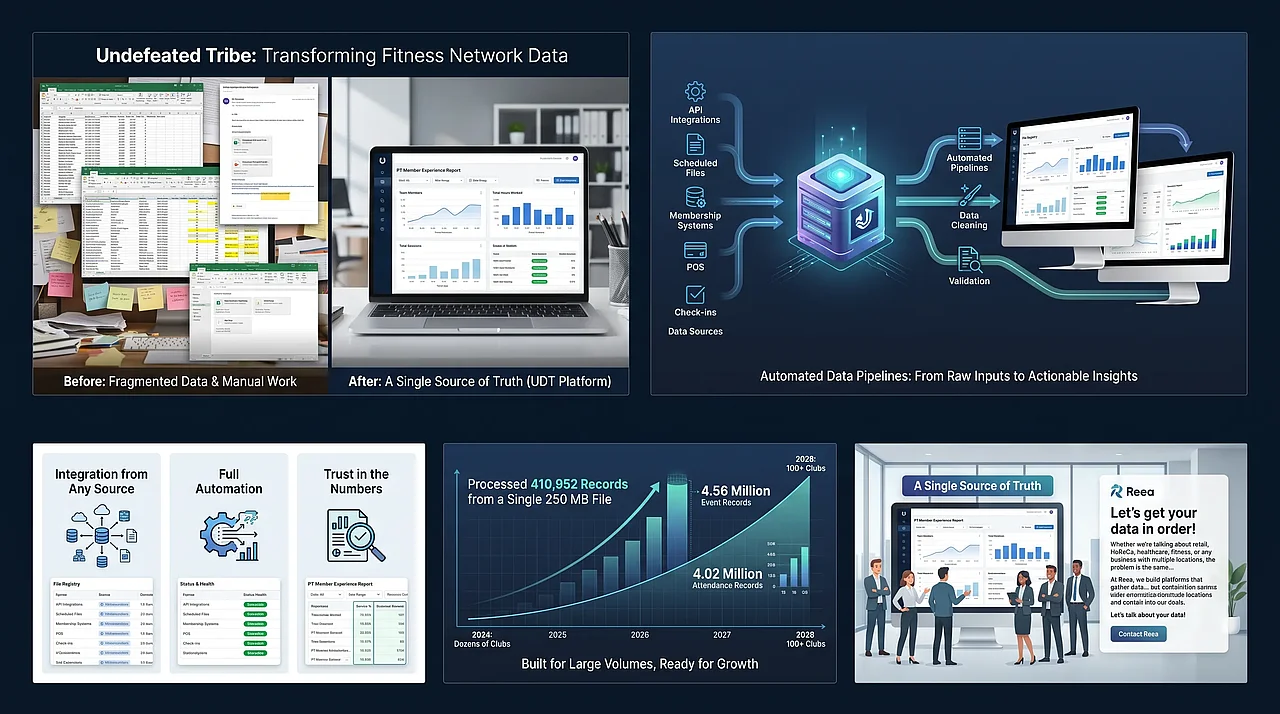
To be precise: the data describing each club’s daily operations came from different sources—namely, memberships, sales, check-ins, group classes, personal training sessions, and facility operations data. Some data arrived via software providers’ APIs, while other data came through files delivered periodically. Each source had its own format, its own rhythm, and, of course, its own issues.
The consequences were evident in consolidated reports that were difficult to produce, comparisons between clubs that required manual labor, and a constant dilemma for management: “How much can we rely on these figures?”
And the stakes were all the higher because financial rewards for the clubs are calculated based on this data. When members’ performance and progress translate into money, the data must be accurate, verifiable, and transparent.

What does the UDT platform do?
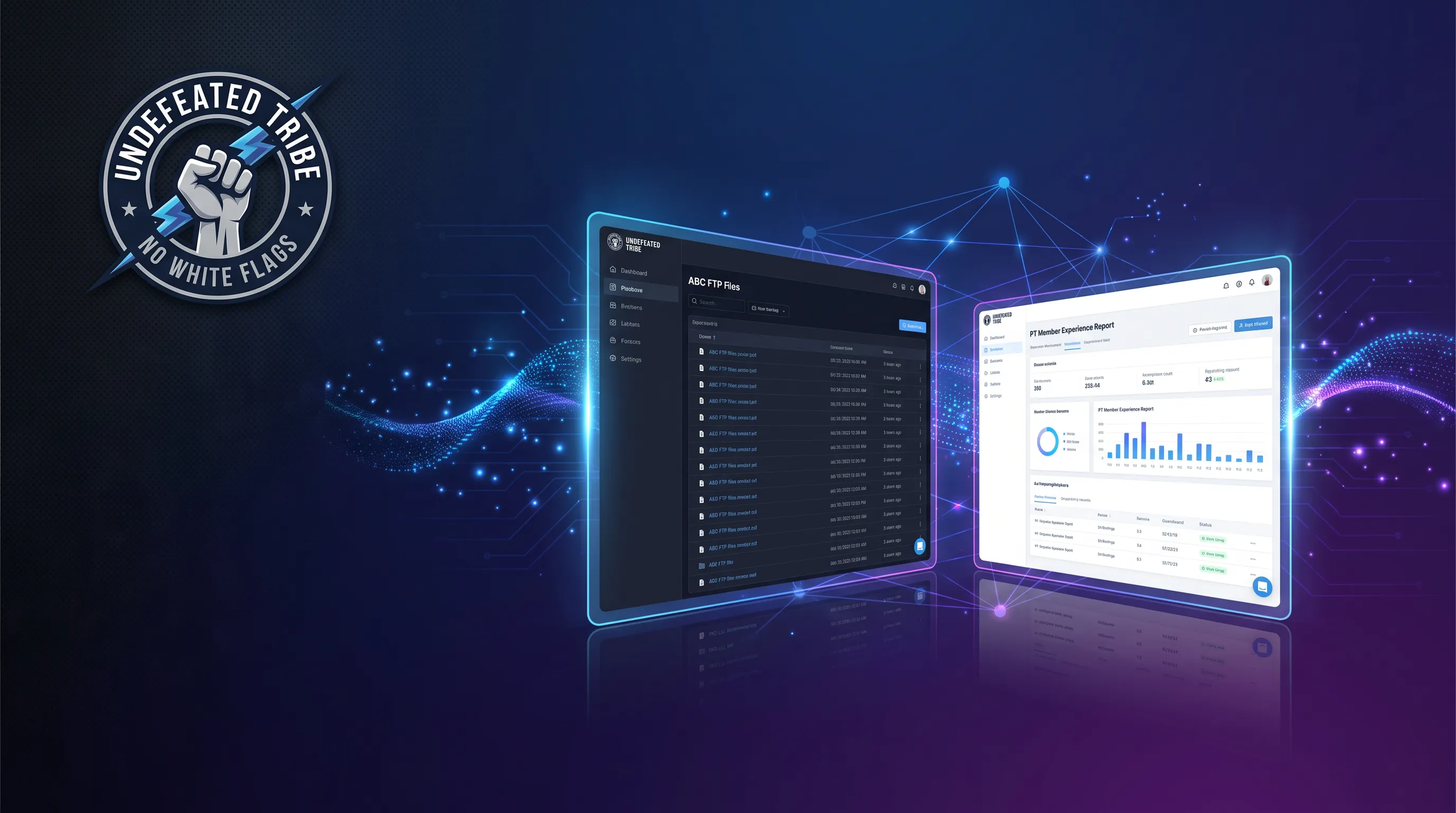
UDT (Undefeated Tribe) is the network’s internal data and reporting platform. Its role is simple to describe but very complex to execute: to gather all relevant data in one place and transform it into actionable insights.
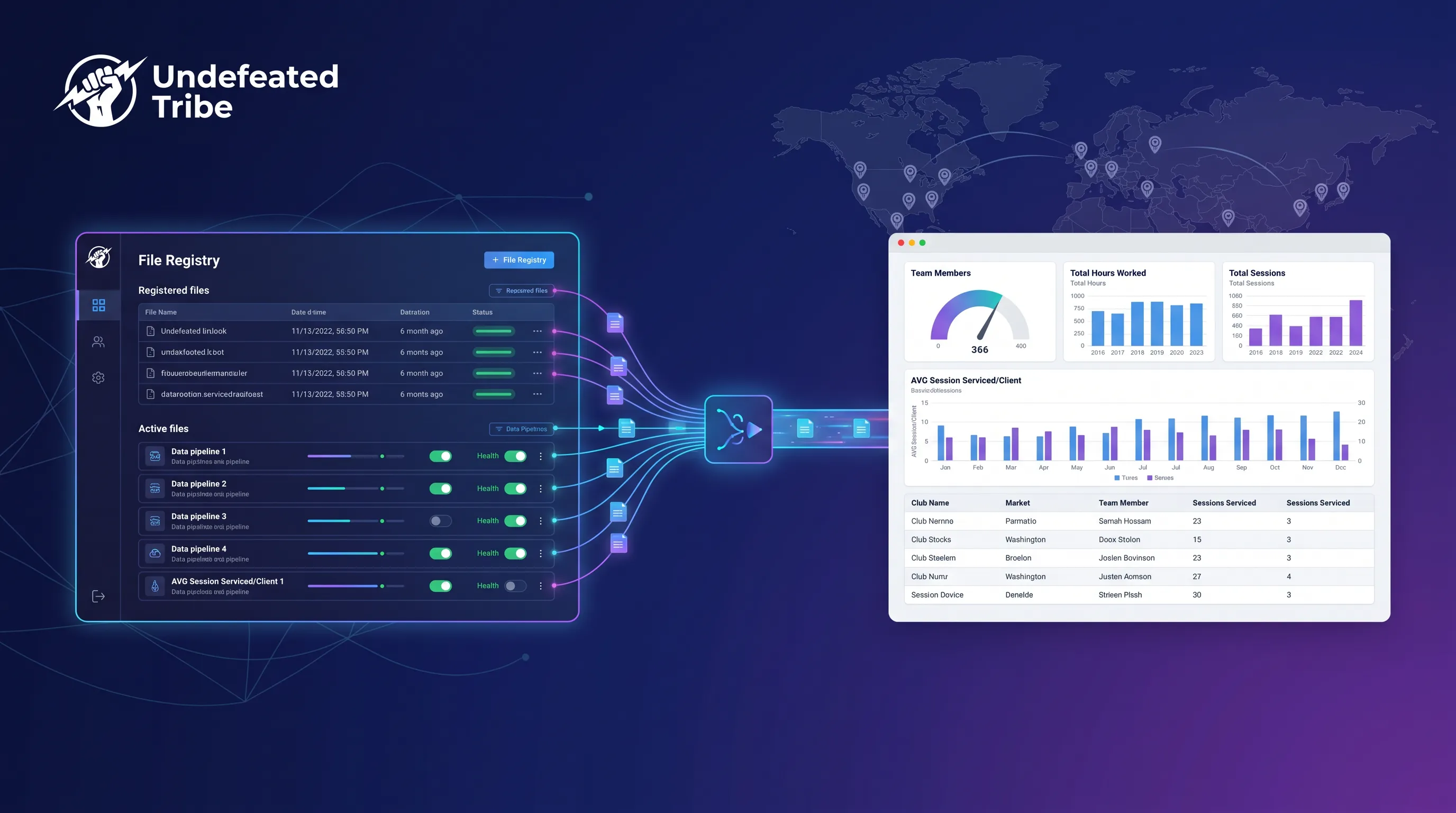
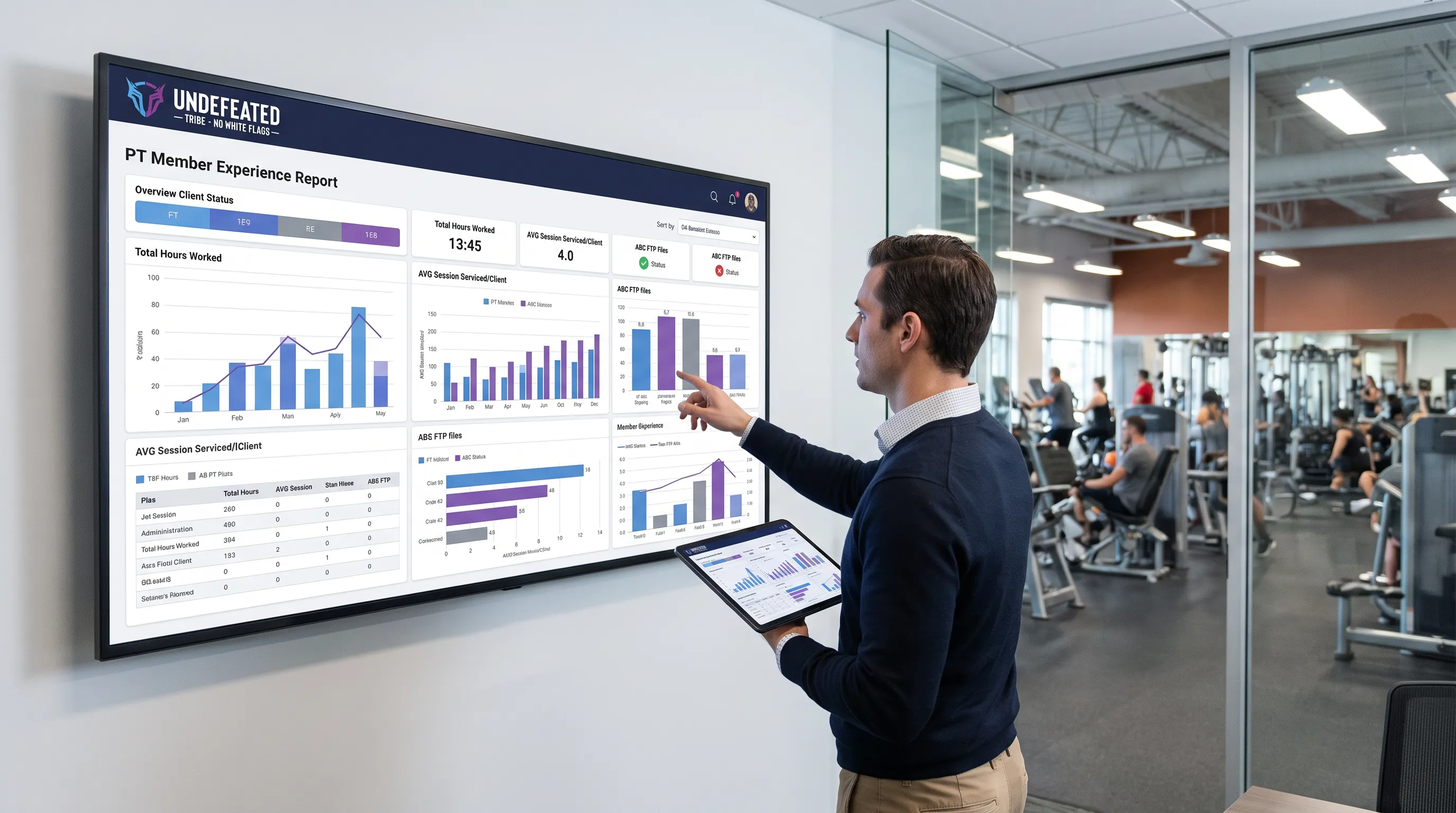
The platform collects data on memberships, sales, check-ins, classes, personal training sessions, and facilities, sourced from both vendor APIs and scheduled files. Automated pipelines take these data streams, clean them, validate them, and transform them into club- and company-level dashboards; they also generate financial reports and reports on member progress, including how much weight members have lost.
Based on these reports, clubs ultimately receive financial rewards. The platform thus becomes not just an analytics tool, but the foundation of a fair incentive system for the entire network.
The Solution: Clean Data, at Scale
We built the platform around three principles.
- Integration from any source. Every provider and every file type has its own connector. Whether the data comes via an API or in a scheduled file delivery, it ends up in the same data model, unified across the entire network.
- Full automation. Pipelines run without manual intervention. New data comes in, is processed, and appears in dashboards—without anyone having to copy, paste, or manually reconcile tables.
- Trust in the numbers. We’ve also included dedicated data health views in the platform. The team sees not only the results but also whether the workflows ran correctly, if any data is missing, or if anything looks unusual. Reporting is only useful if you know you can rely on it.
Built for large volumes
The platform works with dozens of clubs and historical datasets containing millions of rows.
A documented validation covered 4.56 million event records and 4.02 million attendance records. In a development import, the platform processed 410,952 records from a single 250 MB financial file.
These figures matter because they show what kind of system UDT is: not just a dashboard layered over a few tables, but a data infrastructure built to scale alongside the network. With plans to reach 100 locations by 2028, each new club must integrate into the same system without compromising performance or data quality.
The Result
Today, Undefeated Tribe has a single source of truth for the entire network. Management sees the company’s overall performance, each club views its own results, and comparisons between locations are made based on the same rules and the same data.
Reports that used to require hours of manual work are now generated automatically. Issues in data flows are visible before they affect decision-making. And rewards for clubs are calculated based on verifiable figures, making the incentive system fair and transparent for everyone.